The Contra Costa County Board of Supervisors delayed a vote on a policy that would bar county agencies from cooperating with federal immigration authorities, sending the draft back to County Counsel for review against new state guidelines released days earlier.
Supervisors were set to adopt the non-cooperation policy on Tuesday, July 7. Instead, District I Supervisor John Gioia moved to direct County Counsel to analyze whether the county's draft is consistent with the state Attorney General's model policy and state law. District II Supervisor Candace Andersen seconded the motion, which passed.
The delay came after Attorney General Rob Bonta published a model policy on Wednesday, July 1, as required by Senate Bill 580. That 2025 law requires all California local jurisdictions to adopt the model policy or an equivalent by January 1, 2027, giving Contra Costa roughly five months to finalize its approach.
The East Bay Times reported the issue is expected to return to the board in August or September. No specific meeting date has been confirmed.
What the draft policy would do
Resolution No. 2026-279, prepared by Kendra Carr and Peter Kim, co-directors of the county's Office of Racial Equity and Social Justice, would limit the use of county funds or resources to assist Immigration and Customs Enforcement, restrict ICE access to county-owned property, prohibit employees from disclosing certain information to immigration authorities unless required by law, and establish a Sheriff's Office reporting requirement. The policy would apply to all county departments and services, including those serving Lamorinda residents.
Supervisors Ken Carlson and Shanelle Scales-Preston developed the draft over the past year as members of the Equity Committee and forwarded it to the full board in June 2026.
About 25% of Contra Costa County's residents are immigrants, according to the East Bay Times.
Resolution vs. ordinance still unresolved
The board remains split on whether to adopt the policy as a resolution or an ordinance. Scales-Preston and Gioia favor an ordinance, which community advocates have pushed for because it carries stronger enforcement mechanisms, including legal consequences for violations. Andersen and Carlson prefer a resolution, which would take effect immediately after ratification rather than requiring multiple public meetings and a 30-day waiting period.
County Counsel Tom Geiger said employees who violated the guidance would face the same disciplinary measures under either approach. The county would not fine itself or its employees, Geiger said, but would terminate contracts with third parties who violated the policy.
Supervisors say delay won't change current practice
"Us delaying is not going to change how the Sheriff's Department interacts with ICE. It's not going to change how any of our departments interact with ICE," Andersen said at the July 7 meeting, noting that much of the proposed policy is already being practiced by county departments.
Carlson said the policy would "send a message to a community that's divided and afraid."
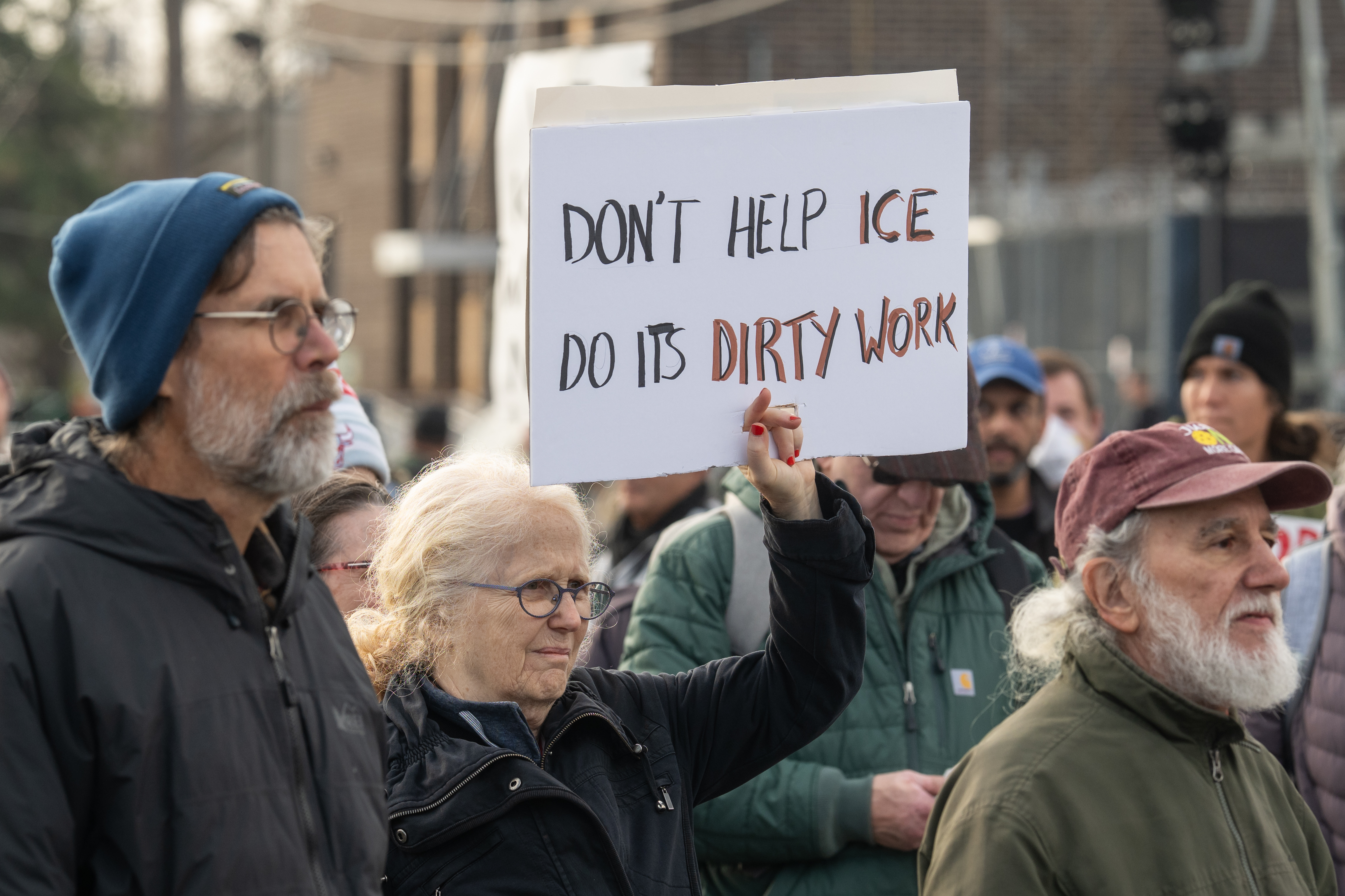
More than 40 speakers addressed the board on the item at the July 7 meeting, according to the official minutes. Most neighboring Bay Area jurisdictions already have ICE non-cooperation policies on the books, including Alameda, San Mateo, and Santa Clara counties and cities such as Richmond, Pinole, and Antioch.
Residents can track the item's return to the board agenda on the county's Legistar calendar at contra-costa.legistar.com.